B.Tech in AI & Data Science
2023–2027
AI & DATA SCIENCE ENGINEER • CHENNAI, INDIA
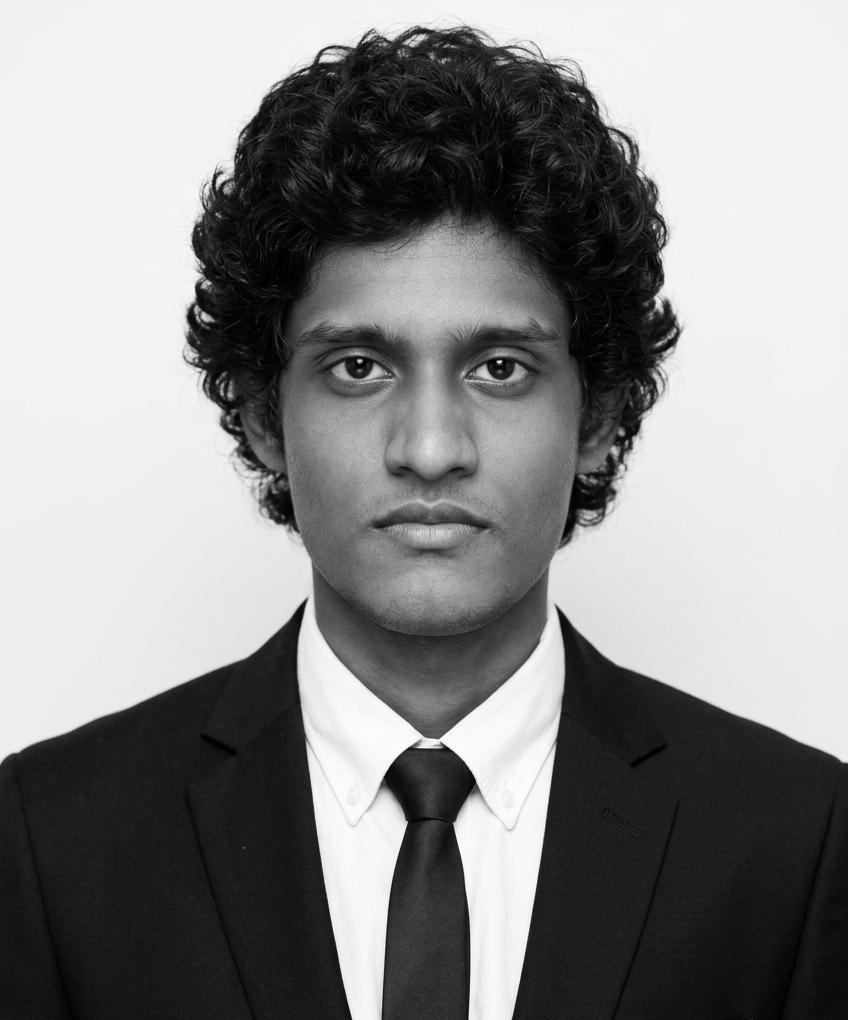
VIGNESH BALAMURUGAN
BUILDING SYSTEMS THAT
REASON, VERIFY & SHIP.
PROFILE / 2026
I turn applied AI research into dependable products—from multi-agent workflows and RAG systems to computer vision and production backends.
- 03
- AI internships
- 8.82
- Current CGPA
- 2×
- GATE streams
01 / ABOUT
ENGINEER + RESEARCHER
What I bring
Ideas are cheap.
Evidence is the work.
I am a B.Tech AI & Data Science student at IIIT Sri City who enjoys the difficult middle between a promising model and a system people can actually trust.
My work spans agent orchestration, retrieval and factual verification, vision research, backend architecture, evaluations, and deployment. I care about the unglamorous parts too: validation, failure states, audit trails, reproducible tests, and clear product decisions.
Discuss a role or collaboration ↗From evaluation fixtures and test suites to cloud deployment.
Computer vision and intelligent transportation manuscripts under review.
Qualified in both Computer Science and Data Science & AI.
02 / EXPERIENCE
RECENT ROLES
Work history
Building with
real constraints.
Ownership across AI architecture, backend reliability, and applied research—not isolated notebook demos.
07 / 2026NOW
GenAI Engineering Intern / AI Lead
ResonateAI
Leading a seven-member AI roadmap for an autonomous, multi-framework app-generation platform. Built the LangGraph Planner–Coder–Reviewer flow, structured validation, bounded repair, follow-up regeneration, and production queue integration.
- LangGraph
- Django
- Celery
- Redis
- Groq
05 / 202606 / 2026
Backend Lead / AI Full Stack
The AI Signal
Designed Atlas Intelligence's modular backend and reliability layer, including source claims, confidence-based approval, conflict detection, manual review, audit logs, and deployed ingestion flows.
- TypeScript
- Hono
- Prisma
- Neon
- Cloudflare
05 / 202507 / 2025
AI Research Intern
NIT Tiruchirappalli
Engineered a ViT–LSTM human-activity-recognition pipeline for video streams and an end-to-end video-captioning system. Co-authored research currently under review.
- PyTorch
- ViT
- LSTM
- OpenCV
- Video AI
VIRTUALFORAGE
Data Analytics Virtual Internship / Job Simulation
Deloitte via Forage
Completed a practical analytics simulation covering data wrangling, KPI dashboard design, and insight synthesis on unstructured client datasets modeled on Deloitte consulting work.
- Data Analytics
- Data Wrangling
- KPI Dashboards
- Insight Synthesis
03 / SELECTED WORK
COMPLETED SYSTEMS
Featured builds
Systems with
receipts.
Six projects selected for depth, reliability, and range. Every metric is scoped to its committed evaluation—not inflated into a universal claim.
01 / AGENTIC RAGTEAM CONTRIBUTION
AgentMesh
A multi-tenant platform for trustworthy customer-support AI, with hybrid retrieval, claim-level verification, safety vetoes, escalation, immutable knowledge releases, and auditable decisions.
30 / 30committed workflow checks passed across 10 isolated workspaces
02 / AI COMPILER2026
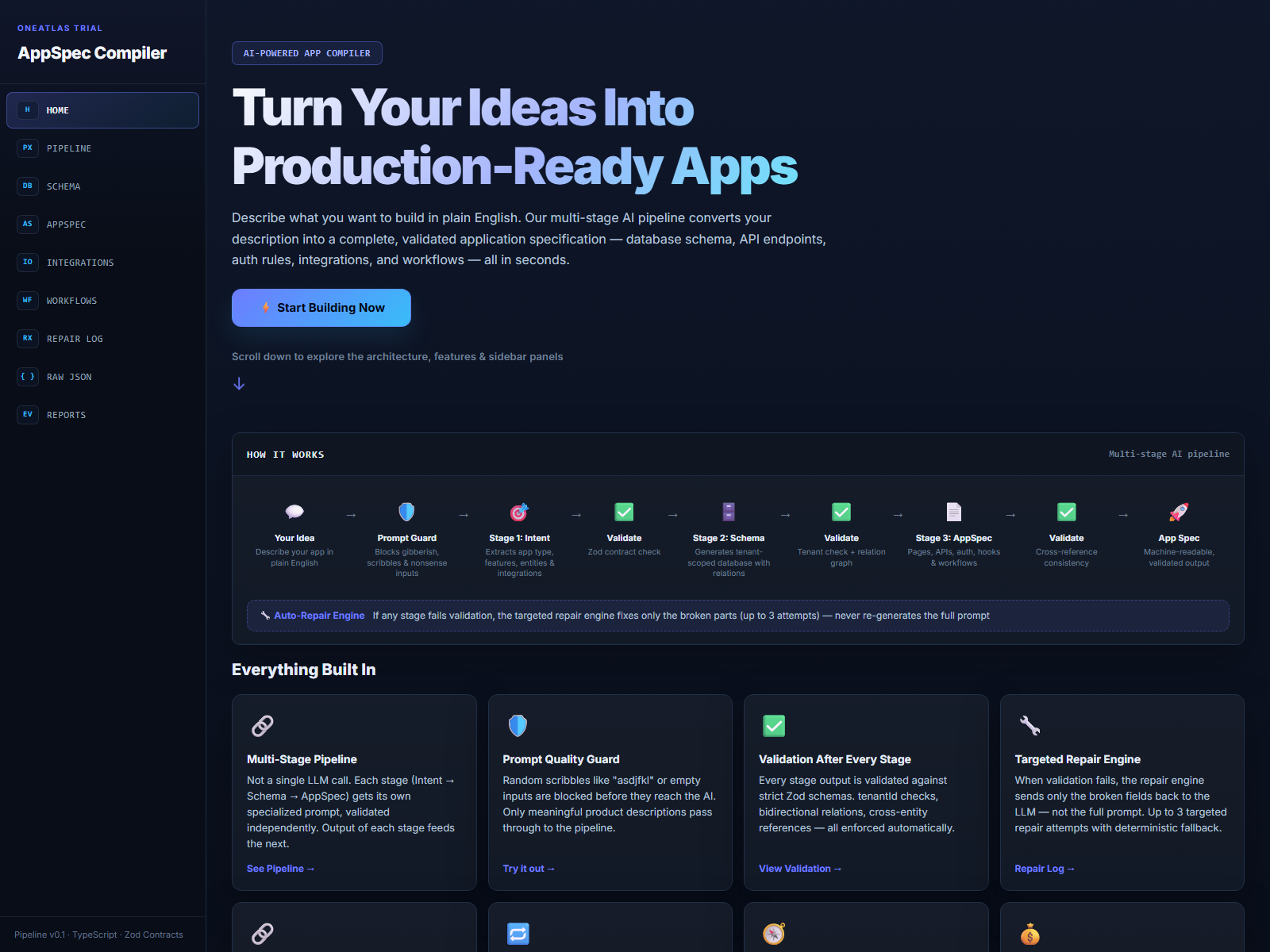
AppSpec Compiler
Compiles a natural-language product prompt into validated AppIntent, DataSchema, and AppSpec contracts—with targeted repair and deterministic fallback.
03 / PRIVACY ENGINEERINGSCALER AI LABS
Sentinel PII Redactor
An offline, DOCX-aware pseudonymization tool that replaces sensitive entities consistently across paragraphs, tables, headers, footers, notes, and comments.
04 / DECISION AI2026
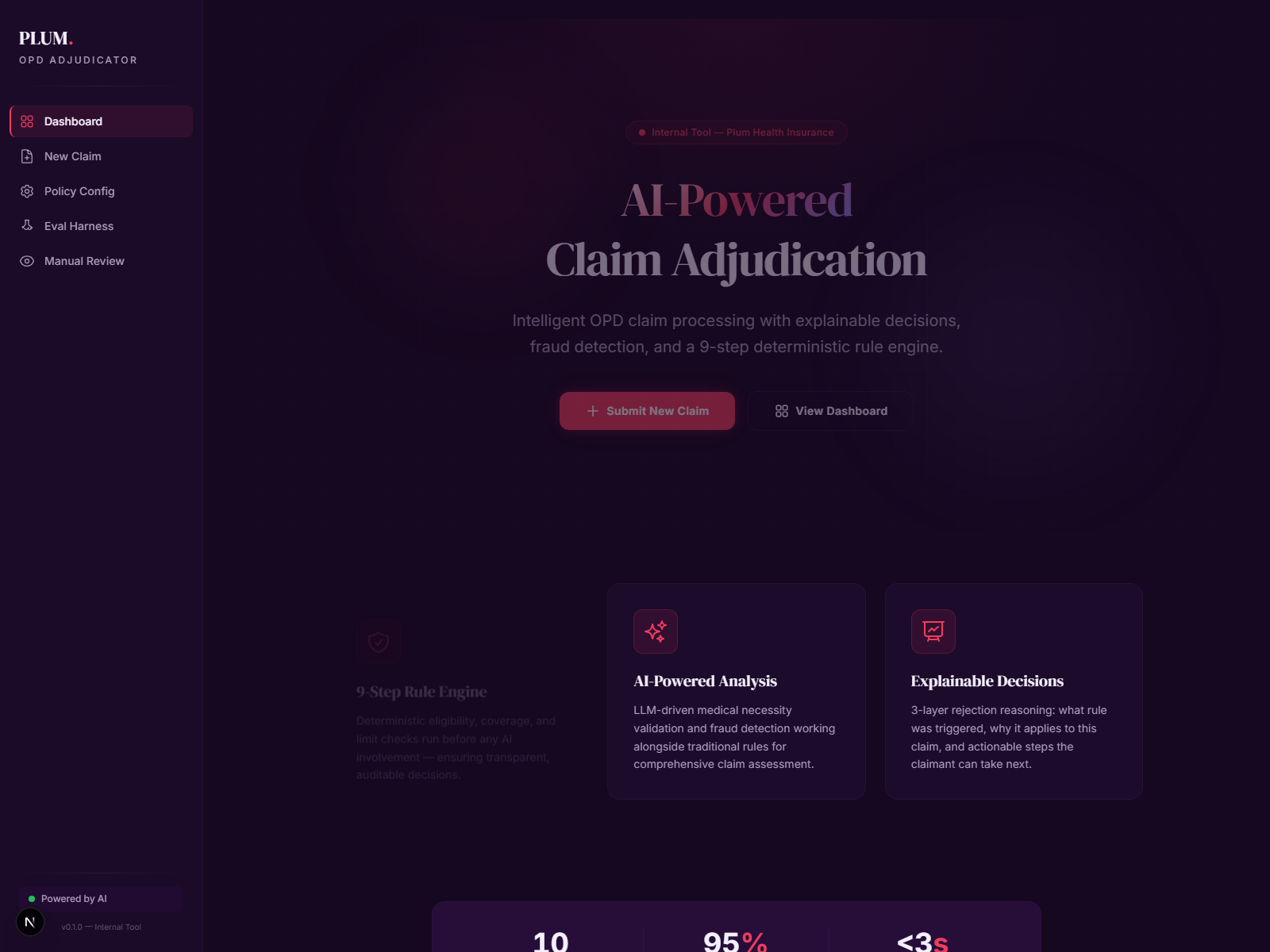
OPD Claim Engine
A rule-first, nine-stage insurance adjudication pipeline combining deterministic eligibility checks with medical, fraud, and explainability layers.
10 / 10assignment test cases
05 / AGENTIC TRAVEL2026
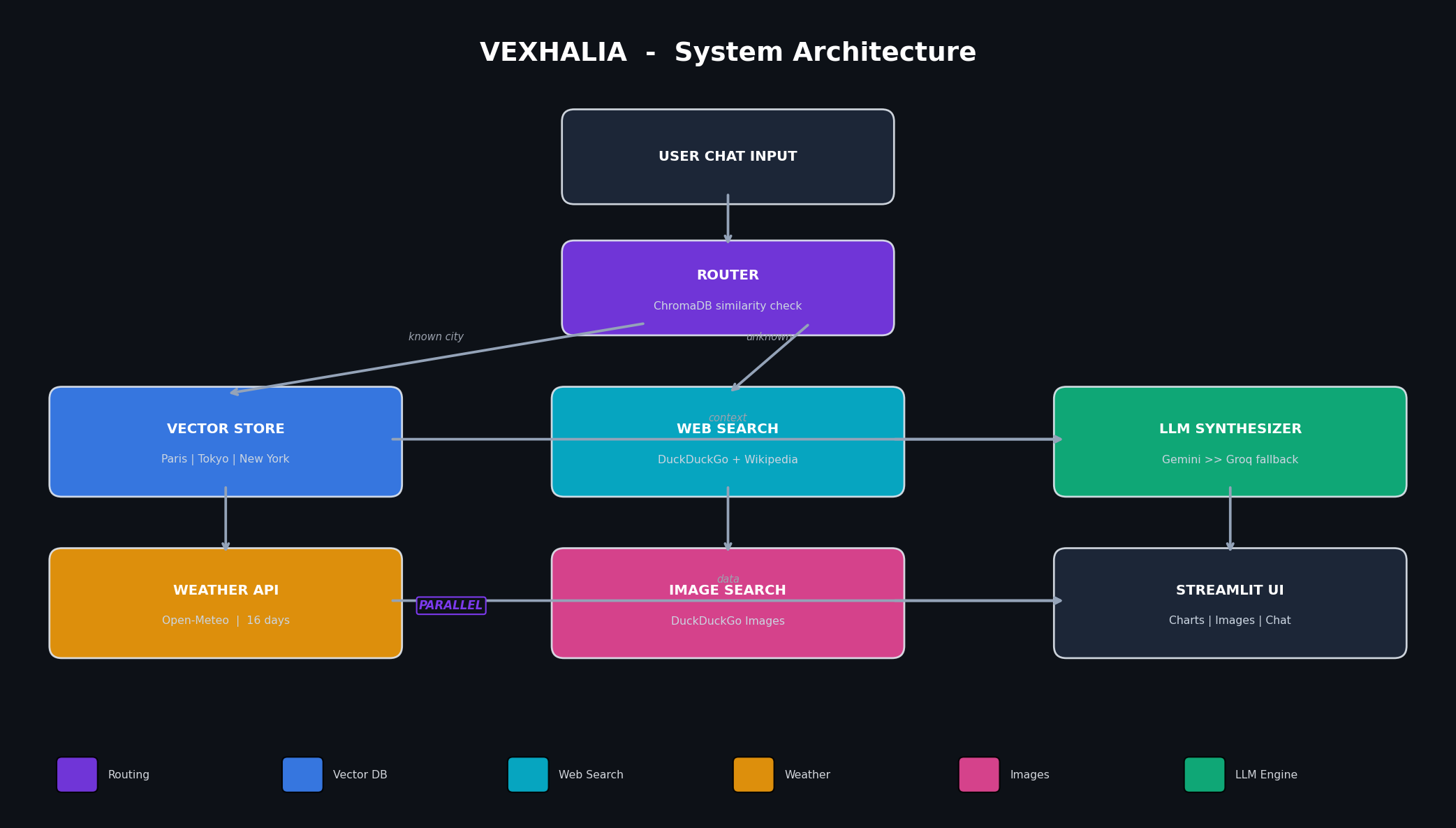
VEXHALIA
A multimodal travel-intelligence agent that routes between vector retrieval and live search, then runs weather and image collection concurrently before synthesis.
06 / REVENUE AI2026
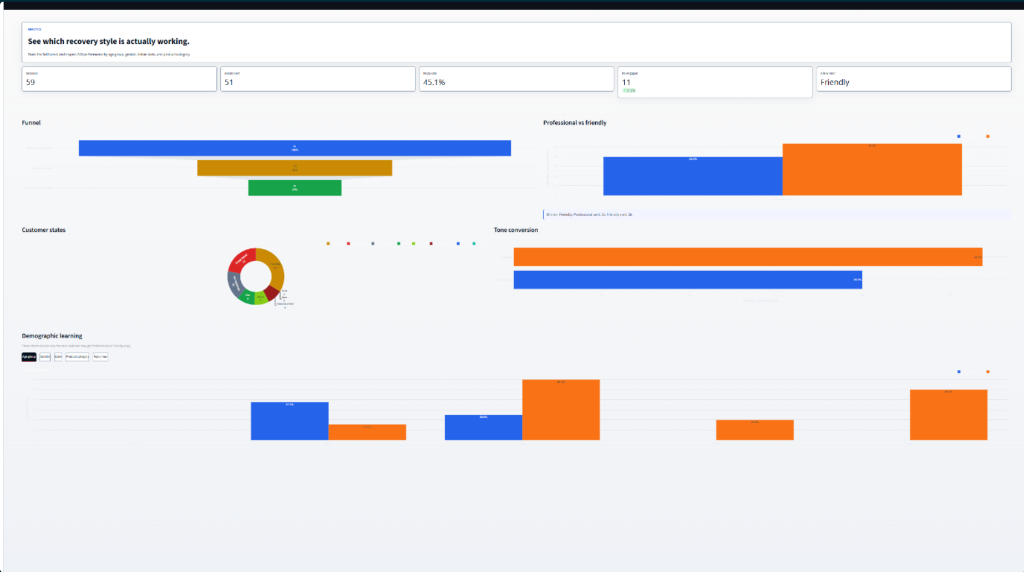
REVARX
An abandoned-cart recovery system with automated follow-up, tone A/B tests, reply-intent classification, journey timelines, and campaign analytics.
Project archive
More completed work
07RAG Fact VerificationMulti-hop retrieval + DeBERTa NLIAI / NLP ↗
08FastAPI Task ManagerJWT, React, PostgreSQL, DockerBackend ↗
09RESAI Bias MitigationFairness metrics + Grad-CAMVision ↗
10Stampede Risk RegionsDual-head crowd analysisVision ↗
11Chennai Night SafetyGIS routing + ML safety rastersData / GIS ↗
12Exhaustion ParadoxPrimary survey + statistical EDAData ↗
13LinkSnipLinks + product intelligenceFull stack ↗
14RL Gene-Editing AgentDrift-aware CRISPR decisionsAI / RL ↗
15Online Fraud DetectionTransaction risk modellingAI / ML ↗
04 / RESEARCH
UNDER PEER REVIEW
Honors research
STRIDE.
Training-free lane discovery & travel-direction estimation for fixed traffic cameras.
STRIDE turns repeated vehicle motion into an interpretable map of road structure. It combines tracking, density and motion-coherence maps, circular statistics, and rule-based region extraction—without training a lane-segmentation model.
The current revision evaluates the method across 47 UA-DETRAC scenes. Public wording here stays deliberately conservative while review is ongoing.
Explore the research repository ↗MAJOR REVISION
International Journal of Intelligent Transportation Systems Research
Journal manuscript IJIT-D-26-00620 remains under peer review. Revision work is in progress; this is not an acceptance claim.
JOURNAL TRACK / IJITSRUNDER REVIEW
IDICON Conference Submission
The conference version is currently under review. Acceptance and publication details will be added only after an official decision.
CONFERENCE TRACK / IDICON
05 / SKILLS
TECHNICAL ARSENAL
Capability map
Technical skills
built for delivery.
Intelligence
LangGraph · LangChain · MCP · RAG · FAISS · ChromaDB · Hugging Face · Multi-agent systems
Models
PyTorch · TensorFlow · scikit-learn · OpenCV · Vision Transformers · RL · NLI
Product
FastAPI · Flask · Django · Node · React · REST · TypeScript · PostgreSQL · Redis
Operations
Docker · Kubernetes · GitHub Actions · MLflow · DVC · Azure · AWS · Prometheus · Grafana
Résumé inventory07 domains
Languages
Python · Java · C · SQL · JavaScript
GenAI Tooling
LangChain · LangGraph · MCP · AI Agents · Hugging Face Transformers · RAG · FAISS
AI & ML
PyTorch · TensorFlow · scikit-learn · OpenCV · Reinforcement Learning · Vision Transformers
Cloud & DevOps
AWS · Docker · Kubernetes · GitHub Actions · CI/CD · Git · GitHub · Linux · MLflow · DVC · Prometheus · Grafana
Databases
MySQL · MongoDB · PostgreSQL · Redis · ChromaDB
Backend
FastAPI · Flask · Node.js · REST APIs · SQLite
Core CS
DSA · OOP · Operating Systems · Computer Networks · System Design · API Design · DBMS · Distributed Systems
99.83%
Machine Learning specialization
100%
Advanced Deep Learning specialization
TOP 2%
NPTEL Programming in Java
CSE + DA
GATE 2026 qualified
06 / CERTIFICATIONS
VERIFIABLE CREDENTIALS
Proof of learning
Credentials
you can inspect.
Seven completed learning, simulation, and competition records, each linked directly to the original credential.
01MACHINE LEARNING
Supervised Machine Learning
99.83%Recorded score
02MACHINE LEARNING
Advanced Learning Algorithms
100%Recorded score
03PROGRAMMING
Programming in Java
TOP 2%Topper distinction
04DATA ANALYTICS
Data Analytics Job Simulation
COMPLETEDPractical simulation
05PROGRAMMING
Master Class in Python
CERTIFIEDCourse credential
06ARTIFICIAL INTELLIGENCE
AI Masterclass
CERTIFIEDCourse credential
0736-HOUR HACKATHON
PEC Hacks 4.0 Winner
WINNERAmong 200 teams
Find the evidence
Profiles & proof
07 / CONTACTAVAILABLE FOR AI / ML & GENAI ROLES